




How Micro-adjustments to Your Food Can Have a Huge Impact on Health
The holiday schedule of parties, fellowships and potlucks is in full swing. If I wasn’t intentional about how I approach my ingestion habits this time of year I’ll be 10 pounds heavier by January with a return of annoying symptoms like digestive discomfort, joint pain, hot flashes and sleep disturbances that plague so many women of a certain age.
Take back control of your health with a few simple strategies that I promise won’t take away from the joy of the season or the treat-factor needed to buffer against the cold and celebrate life.
1. Read Food Labels
Many of your favorite convenience brands are loaded with food additives and create nothing but inflammation in the body and overload the liver. When your liver is busy detoxifying bad stuff it doesn’t have the capacity to run the hundreds of other processes it is in charge of to keep you healthy.
The additives include preservatives to stop the growth of bacteria and mold but they do untold damage to your gut microbiome in the process, leaving you more susceptible to colds and flu this winter.
In many cases there are other brands that focus on real ingredients or at least cut down the additives to a minimum. Simple swaps can make a huge difference in the impact on the body especially when a single meal may incorporate several packages of convenience foods.
Here’s just three simple examples from the Thanksgiving menu:
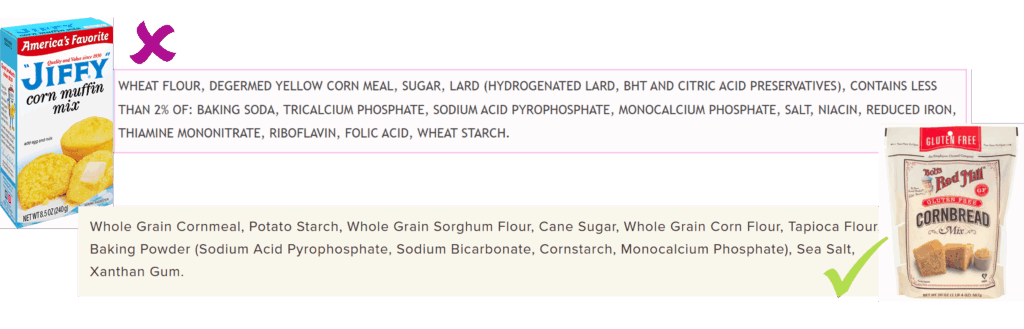
The biggest hit in our house is the corn casserole. I’ve shared our family recipe at the end. But the key ingredient is a ready-to-go cornbread mix. The original version called for Jiffy but we avoid gluten and Jiffy has wheat in it, likely contaminated with glyphosate; not to mention BHT (butylated hydroxytoluene), a potential endocrine disrupter. So we switch it out for the Bob’s Red Mill version which is far cleaner.
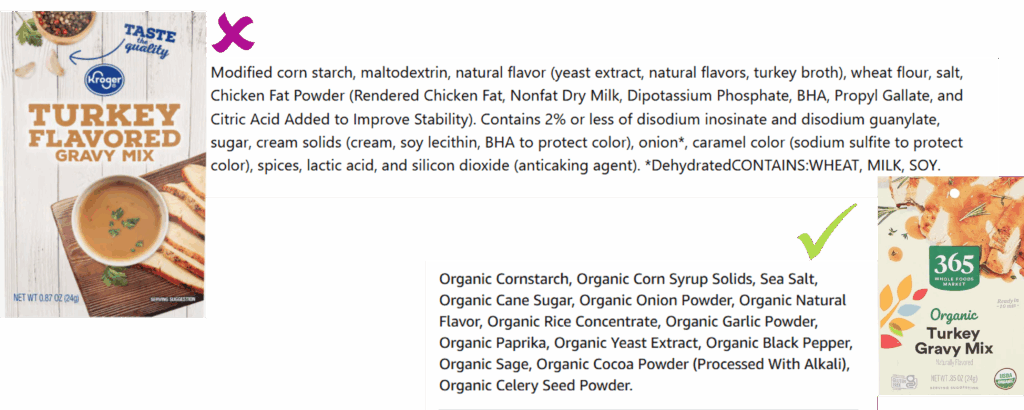
Turkey gravy is a must and though we enhance it with the drippings from our pasture-raised turkey from a local farm, I prefer the convenience of a packet to get it started. The only one I buy is the Wholefood’s 365 brand. Check out the Kroger version by comparison. Ready-to-pour gravy has even more additives.
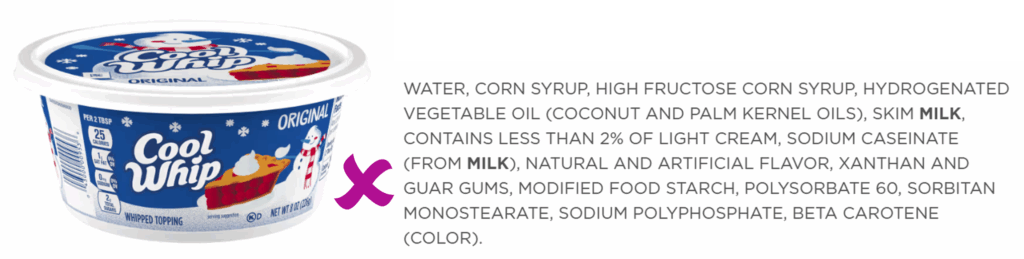
The last example is the worst. Some food-scientist conjured up Cool Whip which doesn’t even taste any good but is pure evil to the body. Corn syrup and high fructose corn syrup, polysorbate 60? This is not food. There are one or two slightly healthier versions, that taste a whole lot better (Coco-whip by So Delicious being one of them that I will use in a pinch) but I prefer strategy #2 when it comes to pie toppings.
2. Ingredient Switch
The best strategy is always going to be to cook from single ingredients.
Happily, many more people cook from scratch at this time of year using generational recipes Grandma used to make. The only problem is the food industry has done a number on many of the basic ingredients. So you still need to be mindful and make a few tweaks.
Wheat flour is the most obvious boogeyman. Conventional wheat, particularly in the US, has been heavily hybridized and contaminated with glyphosate that causes all sorts of health problems in even small amounts. My advice is to switch to organic heirloom wheats as a minimum standard. You can buy brands such as Jovial in most grocery stores or to take the health benefits up a notch shop online at places like AncientGrains.com. I have recently graduated to freshly milling their Einkorn berries and it is the only wheat my body can tolerate.
Another alternative is to switch to nut flours like almond and coconut. You may need to adjust the recipe a little as the moisture content differs.
For fats and oils ditch the industrial vegetable oils like canola, sunflower, safflower or soy and replace with unrefined coconut oil which is naturally sweet and healthy, and especially yummy in baked goods. Organic butter from pasture-raised animals or ghee are other options.
For sugar and sweetness, please avoid the corn syrup, your body can’t use it. Sugar substitutes like aspartame and sucralose do equal damage. Cane sugar, while natural, gets absorbed into the blood stream too fast so look into options like coconut sugar, dates and date sugar, raw honey, or pure maple syrup.
See my recipe at the end for another family favorite, pecan pie. We serve it with a locally made ice cream from grass-fed cows sweetened with honey and no scary ingredients, or whip up some full-fat cream.
3. Protein Before Sugar
Apart from the sweet ingredients used, the timing of our sugar fix can make a big difference.
Blood sugar spikes inflict the biggest damage on our bodies from artery constriction to rising blood pressure to dehydration. One simple strategy to blunt the spike is to make sure you have eaten sufficient protein before consuming sugar in any form. This includes cakes and sweets as well as other simple carbohydrates like pasta, bread and even sweet potatoes.
Let dessert stay at the end of the meal and if you haven’t eaten in a while don’t snack on high-sugar treats.
Make sure you have plenty of protein and fiber in your meal plan – another reason to switch out grains for nut flours. Devilled eggs are a great appetizer!
See my awesome brisket recipe at the end – just make sure you seek out a pasture-raised version!
4. Plan Meal Times
Beyond the menu planning, give some advance thought to the meals you’re going to be having each day during this busy period.
If you know there’s an evening get-together for example, then try and push breakfast later that day, have a light lunch and possibly skip breakfast the next day. There is added burden on our bodies when we eat around the clock.
We need to give our digestion some time to work and then rest, a minimum of 12 hours at night. After 10-12 hours our bodies finish digesting and get into clean-up mode, clearing out debris including mutant cells, microbes and chemicals. If we add more food before the process has completed, it gets skipped as we switch back to digestion mode.
It is also wise to work in some exercise to heavy eating days. Ideally go for a walk after a big meal. This will help with the sugar spike as well.
5. Limit the Alcohol Intake
Even my frat-boy son in college knows to drink a glass of water between alcoholic drinks. While I’d like to tell you to forego the alcohol altogether, this article is about micro-adjustments so I’ll preach moderation.
Alcohol has to be broken down in the liver which is already dealing with food additives and too much sugar. It’s byproducts, including formaldehyde, are toxic to human tissue with women more prone to the adverse effects than men.
While studies have implied in the past that a small amount of alcohol can be healthy, more recently, the scientific community is questioning the flawed assumptions. One review of the last forty years of research on alcohol intake has refuted any health benefits at all. Other studies have concluded that alcohol consumption accounts for a “considerable portion” of cancer incidence and mortality across the US.
So my advice is to monitor consumption and incorporate some non-alcoholic drinks into the mix. If you’ve had one heavy drinking event try and abstain the next few days and eat plenty of healthy foods and greens to support the detox. Taking NAC (N-acetyl-cysteine) or a glutathione supplement could also support the liver in its duties.
* * * * *
It’s the daily habits day in and day out that will have the biggest impact on your health. That includes the last few weeks of the year. I hope its a great one!
