



Please Understand Me – Why Accepting Neurodiversity Makes Us Human
My older son was diagnosed with Aspergers and ADHD at age 5 suffering various physiological problems that exacerbated his tendencies. That was 16 years ago, during which time I have researched extensively both conditions to figure out how best to help him become the wonderful productive, creative and loving young man he is today.
So, imagine the shock I felt recently to discover, at the age of 54, that I am probably on the autism spectrum myself.
We’ll get into the limitations of labels below, but I guess I’ll be answering to “Aspie” going forward, the affectionate label given to those with Aspergers. I’ll also recount how I came to this discovery as I am quite embarrassed I did not figure it out sooner – Aspergers can look a lot different in women than men.
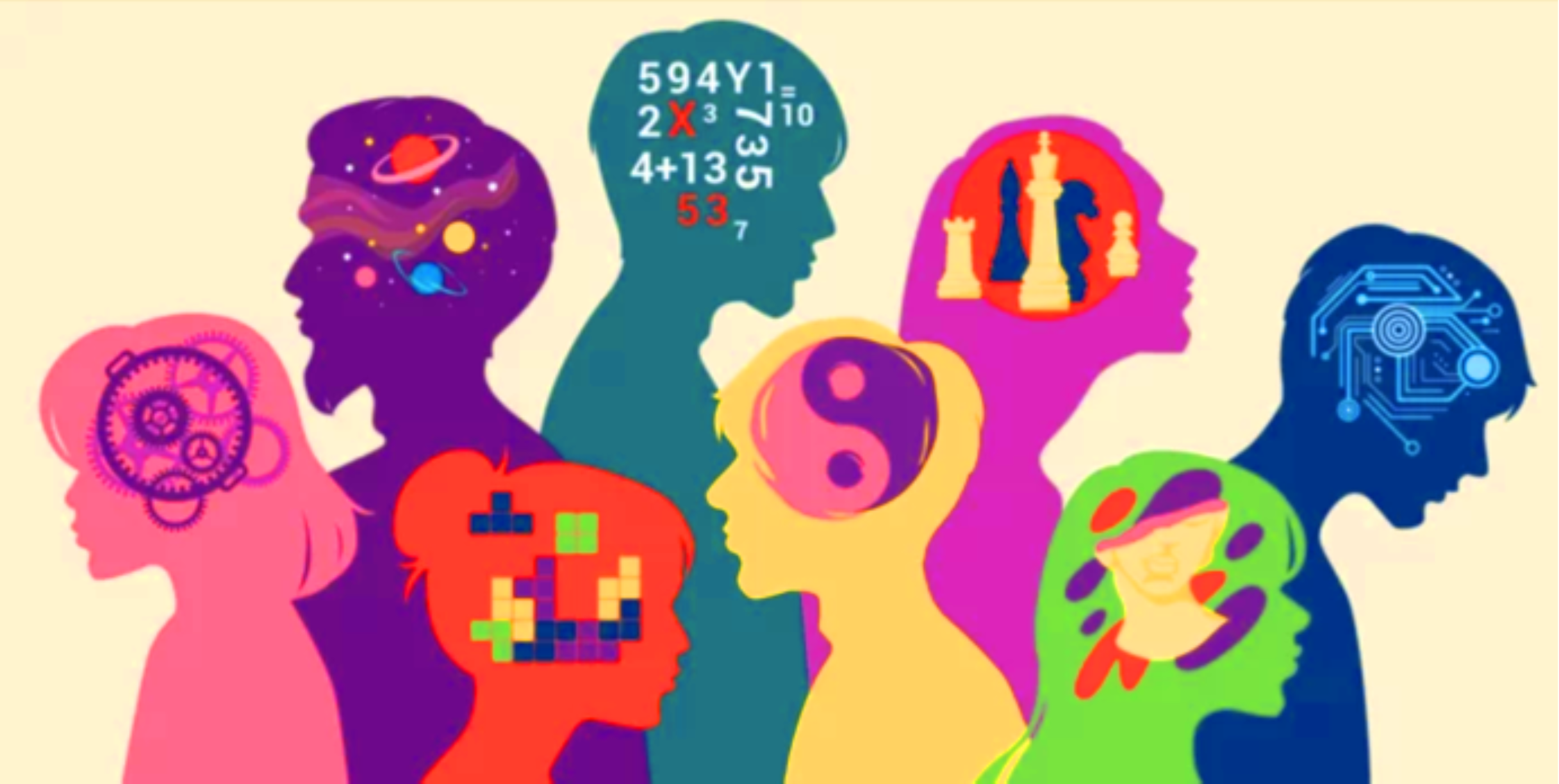
My main take-away though is to provide a broader understanding that “neurodiversity” isn’t a label but rather an explanation of the human condition. We are all unique. By simply being more accepting of other people’s differences in the way they think and approach the world, we will all benefit from the rich tapestry of human life we get to interact with.
In corporate circles I’m seeing a lot of celebration around prioritizing neurodiverse hiring and making a welcoming work environment. But neurodiversity isn’t limited to the special few with a diagnosed “condition” who may have limitations, compared to the majority of the population we may deem “normal” or “neurotypical”.
Labels Limit Our View
The human brain is not an algorithm (sorry Bill Gates!). Neither is the body for that matter. It doesn’t work according to a set program. Every single one of us is as unique as our fingerprints with quirks and idiosyncrasies. So assigning labels can be limiting your view of someone to a one-dimensional stereotype and reducing their individuality to broad categorizations.
It doesn’t help that the medical establishment continues to inflate mental health diagnoses with their constant revisions to the Diagnostic and Statistical Manual of Mental Disorders published by the American Psychiatric Association. Used widely by even general practitioners it assigns a label to a given constellation of symptoms that happen to be behavioral or emotional in nature. Once the label has been assigned it opens up the prescription pad to a range of psychotropic pharmaceuticals that mostly do more harm than good.
Dr Allen Francis was the chair of the DSM-IV taskforce and has written an excellent account of the explosion in psychiatric disorders now compounded by the latest DSM-5. His book, Saving Normal: An Insider’s Revolt Against Out-of-Control Psychiatric Diagnosis, DSM-5, Big Pharma, and the Medicalization of Ordinary Life, is an engrossing read. He laments that “Because of diagnostic inflation, an excessive proportion of people have come to rely on antidepressants, antipsychotics, antianxiety agents, sleeping pills and pain meds”.
He also rails against the extremities of DSM-5 “moving in the wrong direction . . . . turning everyday anxiety, eccentricity, forgetfulness and eating habits into mental disorders”. Clearly a boon for big pharma! He goes on to say “All human difference is being transmuted into chemical imbalance that is meant to be treated with a handy pill . . . . But nature abhors homogeneity and adores eccentric diversity”.
Think how much stronger an ecosystem is that includes a lot of diverse organisms. Whether it’s a farm (the basis of regenerative farming compared to monoculture) or our gut microbiome. Our modern culture is always trying to standardize and reduce everything to an algorithm. Accepting differences, and learning to interact with different kinds of brains will make us all stronger and more resilient.
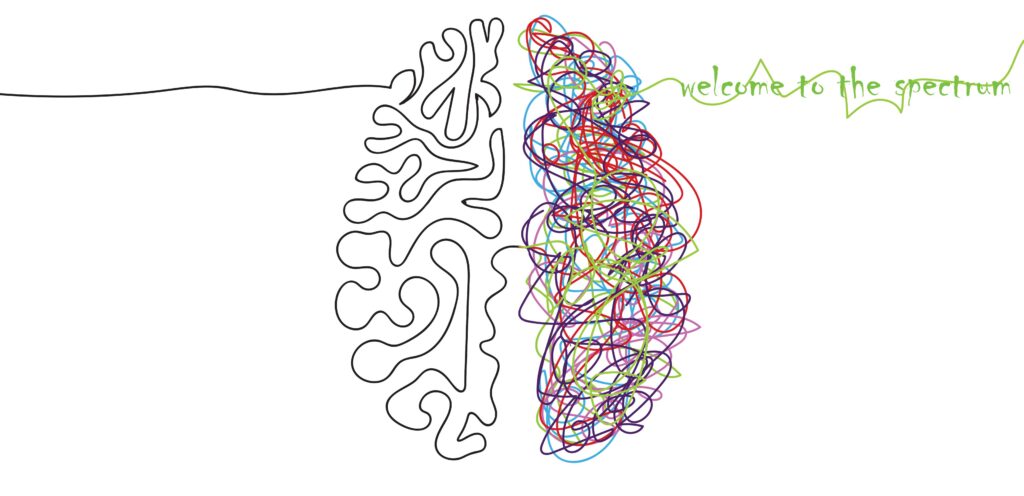
Whilst we’re on the subject of DSM-5 though, I do need to point out an important change that was made regarding autism and related conditions. Aspergers used to be a separate diagnosis but has now been consumed into the wide label of Autism Spectrum Disorder (ASD). It recognizes there are levels of severity: Level 1 (mild), Level 2 (moderate) and Level 3 (severe). But many people have been outraged by the lumping together of those with mild traits enabling them to live meaningful and productive lives with those who are profoundly disabled requiring round-the-clock care who will never hold a job or develop close relationships finding basic communication too difficult.
The term “neurodiversity” itself also raises the blood pressure of many. Neurodiversity is just a biological fact: no two human brains are the same. Everyone’s nervous system reacts differently to their sensory world resulting in different experiences. Neurotypical is often used to refer to those with a style of brain functioning more in line with the dominant standards in society without any limitations.
There are those too who take issue with being referred to as “a person with autism” rather than “an autistic person” using the analogy of being left-handed, you wouldn’t say “a person with left-handedness”. It seems to depend on whether the person in question considers themselves disabled or not. I have affectionately referred to my Aspergers son as an “Aspie”.
I will use various terms interchangeably so please don’t write to me complaining. I see all points of view and feel the most important response is to accept the individual in all their colorful detail without generalizing.
No Disability Here
Looking back now on my life and career which has been filled with adventure and accomplishment it is hard to reconcile with the ASD label.
I completed university at age 20 getting married soon after (the first of three marriages which may have been a telltale sign that relationships are necessary but hard for me!). Going into my chosen profession I qualified as an actuary at age 26 which is very young given that I took a year off to live in Australia with my then husband, and the number of exams that are involved while also working full time.
I progressed quickly, becoming one of the youngest ever partners in the large global firm I worked for at age 30. As an executive I travelled all over the world speaking at conferences and eventually became part of a global leadership team overseeing various business priorities of our local operations in 50 countries.
I have always enjoyed working with people from different cultures with different ways of working and thinking. I have a much easier time with the outwardly emotional Latin cultures (my best friend is Colombian, her first language is Spanish). It helps me to get an immediate sense of our relationship and how you’re doing today compared to the reserved British or Asian cultures (more on this below). Interestingly, my Aspie son has chosen a wonderful outgoing Latina gal as his life partner. I can totally relate.
In the past I’ve joked that I become autistic for 24 hours every month when my hormones bottom out. I can’t handle any external stimuli and totally shut down for a day. I ride it out with no problems if life is calm but if something stressful happens or someone pushes me too hard, I erupt. The rest of the month the exact same situation doesn’t phase me.
Another semi-joke I’ve made in the past is that a psychologist would probably dub me bi-polar if I was analyzed against that label-making instruction book, the DSM-5. I can have incredible energy and multi-task up a storm with creative ideas, and even be outgoing and social for a period. But when the hormones crash and a trigger happens I can descend into such a deep hole of depression I am praying for God to turn the lights out there and then.
When the Light Went On
The revelation for me came only last week when I happened to read the autobiography of Temple Grandin: Emergence – Labeled Autistic.
I had been invited to attend a talk she gave a few weeks ago at our local theatre. Now in her late 70s, Grandin was diagnosed with autism in the 1950s. She endured a difficult childhood and didn’t speak until she was 3 but has emerged as a world expert in her chosen field of livestock handling design as well as being a leading speaker and advocate for autistic children.
I was aware of Grandin since the 2010 movie of her life story starring Clare Danes came out the same year my son was diagnosed. So it was a treat to hear her speak in person.
The topic was mainly about addressing the deficits in the US education system for children who think differently, whether with a diagnosed condition or just a unique brain. As I’m currently doing research for my new book How to Raise a Healthy Human – to Thrive in a Toxic World, I picked up one of hers called Different Kinds of Minds. But while I was at it, I grabbed her autobiography as well. It was her eloquent descriptions of how the world appeared to her, the actions and behaviors she couldn’t help, as well as the feelings she couldn’t act on, that floored me.
It was once suggested to me that I might have Aspergers but I dismissed the comment as I had assumed Aspie’s suffered from a lack of empathy and emotional connection to other people. Whereas I have always been extremely emotional and in fact am what they call an “empath”: I get completely absorbed in other people’s emotions even people I don’t know well. A stranger can walk into the room and I am immediately aware of what kind of mood they are in or if something is bothering them.
If I find out what is going on with the person I will take on that emotion and think about them and their situation regularly, trying to solve it, wondering in what ways I could help. My close friends appreciate my big heart and loyalty but it can be off-putting to those I don’t know well (but interfere in their life anyway!).
To show you how unusual this particularly trait is in the ASD world, the more common trait is for “mind-blindness” – an inability to put themselves in another person’s shoes. Most “normal” people automatically picture themselves dealing with whatever the person in front of them is talking about. If they’re recounting their day and commenting on a situation or an enjoyable moment, you can relate to what they are saying by imagining how it would feel. But many Aspie’s I’ve encountered cannot. This can make them seem callous and tough to deal with.
For example, one evening I was sitting on our sofa with my now ex-husband (and father of my kids) and he took a phone call that was quite obviously from a girl he met at the pub the night before. They chatted for a few minutes and he said he’d talk to her another time. When he hung up he just went on with his evening, it never occurred to him to make an excuse or try to cover up the conversation he’d just had in front of me. That’s mind-blindness. He was diagnosed with Aspergers shortly after our son in his early 40s. I just mirrored the “nothing to see here” attitude but was silently falling apart inside.

While I find myself generally able to write about things I could never talk about, I will use Grandin’s words here that are the ones that most resonated with me and caused the light bulb to explode:
“I craved tender touching. I ached to be loved – hugged. At the same time I withdrew from over-touch”.
“Wanting but withdrawing. My brain-damaged nervous system imprisoned me. It was as if a sliding glass door separated me from the world of love and human understanding”
When left at boarding school in her early teens she wrote of her mother, “I ached to be enfolded in her arms but how could she know? I stood rigid as a pole trapped by the approach/avoidance syndrome of autism”.
“I remember very little of what I hear unless it is emotionally arousing or I can form a visual image”.
Once I’d come to terms with these features being in line with ASD I’ve made all sorts of connections to my eccentricities.
Memory Problems
I’ve always been fascinated by the brain and wanted to be a neurosurgeon as a teenager. My very traditional father talked me out of it thinking it wasn’t a suitable profession for a nice Jewish girl who should be settling down and raising a family. Maybe my fascination was due to wanting to understand myself more.
One of the enduring problems that has plagued me since childhood is my inability to form emotional memories (unless the situation invoked a really extreme negative reaction). I collect facts like an encyclopedia and my superpower is bringing seemingly unrelated facts together to reach conclusions other people may not have considered. The vast amount of information I hold in my short-term memory and think about daily is quite overwhelming. It’s why I need to write down my thoughts to put them in any kind of order as if you ask me a question and expect a verbal response, all the facts try and come out at once!
But ask me about the restaurant we ate at last month or the vacation we had last year I have no recollection. I have absolutely no memories of my childhood before the age of 12 other than a few old photos that are my default memory. I soon learned that I needed to take photos of occasions I wanted to remember and have been an avid creator of photo albums ever since. If I don’t have a photo of the event, it didn’t happen for me. Even with a photo though, I only “remember” that moment in time, not the activities that surrounded the photo being taken.
I am only just learning that memory problems are a common feature of ASD. For me it has affected my relationships as people think I didn’t enjoy the time we spent together and therefore don’t remember it (or don’t want to!).
I’m also pretty bad at recognizing faces or ascertaining whether our relationship is a close one or just an acquaintance. I tend to “mirror” how the other person is behaving towards me to overcome this. It can backfire though if the other person is having a bad day or has an issue with me. I’ll mirror the interaction and then they can misunderstand whether I have a problem with them. My “emotional brain” lives in the moment and I don’t carry grudges or have ever fallen out with anyone.
Black or White
Everything is very black or white to me. Information is either right or wrong. Data is comforting. I read voraciously and ask a lot of questions which is quite off-putting to most people.
In a business environment it is especially helpful in making good decisions, incorporating a ton of available information and other people’s viewpoints. It put me on the fast track in terms of seniority where I worked.
But this superpower of information analysis to reach a conclusion creates difficulties when people disagree with me, usually basing their opinion on lesser information. Fortunately, for most of my career I was in a leadership position and acknowledged as someone with the right answer. However, the cognitive dissonance that arose during the Covid years when my colleagues didn’t want to acknowledge the truth of the data I was presenting them, impacted my career severely.
My only option to preserve my mental health (and integrity) was to leave the big corporation that was less interested in truth than managing the stock price. It’s why I wrote my first book about the human body, how it works, and how to keep it healthy. Headlines that are based on a single scientific study can really distort the truth of what is the most complex organism on earth. Having the opportunity to organize my many thoughts and information sources into a comprehensive layman’s guide was one of the most rewarding experiences of my life.
Relationship Struggles
Probably my biggest difficulty in life is the automatic application of the black or white rule to relationships. The categories here seem to be “safe” and “unsafe”. Anyone who is not in my “inner circle” is not safe and appears to be no different than a stranger. I have to keep my guard up to protect my nervous system from too much emotional input (good or bad) and manage my reactions.
My inner circle is people I have connected with deeply who share the internal parts of themselves with me so I really understand “the truth” of who they are. Through our shared understanding, my inner circle know me and my heart, my deep commitment to them and their needs, what they are going through and how I can help.
One of the problems with the safe/unsafe categorization though is that I sometimes get them mixed up! So I can appear overly friendly with someone I barely know which has created problems in business situations.
On one trip to Asia for example I was technically an executive in the company but I was leading a one-week onboarding program for a bunch of fresh graduates and early career new hires who were forming a new centralized support team we were developing offshore. Spending so much time with these wonderful young people who shared their backgrounds and aspirations for joining the company, they became almost like my children and I was very informal with them leading to a complaint and later reprimand.
My directness is also off-putting if you don’t know me well. If you ask me a question I will tell you clearly and unambiguously the literal answer, 100% truth. It is impossible for me to add fluff or be vague; small talk is excruciating. It feels like lying to me. Stop beating around the bush and tell me what you’re really thinking and feeling!
Strangely enough I’m a great mom, mentor and manager (no conceit, just a fact). I think it is because of my empathy and emotional insight to the other person who for reasons of our roles I know a lot about. If I know details of you, forming a complete 3-dimensional image, you are constantly on my mind and part of the ongoing activity in my brain connecting all information to all other knowledge that can improve your life in some way. If you’ve made it clear you don’t want that kind of relationship with me, you get moved to the unsafe bucket so I can switch off the connection and essentially you become a stranger.
To all my many business colleagues who did and do look past my eccentricities to know that I care deeply about you and about our work together – I thank you. For every one of the accepting types there have been several of the unaccepting variety. But that’s okay, I’m learning not to take rejection quite so personally.
More quotes from Grandin that resonate with me:
“I “see” the pages of the book or my notes in my mind and “read” information from it”.
“Another study reports that autistics often process written language better than spoken.”
“Communicating with someone – anyone – continued to be a problem. I often sounded abrasive and abrupt. In my head I knew what I wanted to say but the words never matched my thoughts. I know now that not being able to follow the rhythm of another’s speech was part of the problem and made me sound harsher than I intended.”
Self-Medicating
I found alcohol at the age of 12 and it became my crutch until I got sober at 27. It provided the calm my nervous system required to be around my noisy family who didn’t understand me. To this day I find it confusing to reconcile their love for each other with the way they raise their voices and say awful things in jest and then just go about their day.
Alcohol, and later pot, enabled me to be around people without the overly emotional inputs and external stimuli that I found so overwhelming.
The last time I had any alcohol was July 4, 1999. The realization of my alcoholism became clear when I found myself drinking alone inside my apartment on a beautiful sunny American holiday. God had already put sober friends in my life on moving to New York (you can read about here) and they took me to an AA meeting the next day. My sober date is actually July 24th though as three weeks later I found out that one of my friends in the UK was hospitalized with an ectopic pregnancy. Even with the distance involved I was so emotionally distressed I couldn’t cope, but my black or white mind wouldn’t let me drink so I smoked a large joint not realizing it was also against the AA rules!
It was difficult getting sober, forgoing the self-medication to deal with my anxieties and emotional sensitivities. But I clawed my way forward with the help of an AA sponsor and a tight community of similar souls who attended AA meetings daily.
I am still highly sensitive to noise, smells, even the movement of a ceiling fan or the cold air of an AC vent. But I’ve had to learn to what they call “self-soothe”. The AA principles were invaluable in the beginning but finding out that the higher power they speak about in AA is actually the almighty God of the universe was life changing (more on this below).
One form of self-medicating I didn’t give up initially was the craving for physical touch. This resulted in many years of promiscuity (between marriages!) whereas Grandin built herself a “squeeze-machine” after seeing the industrial devices used to keep cattle calm before branding, vaccination or castration. My son slept under a weight-blanket for many years to help calm his nervous system at bedtime.
The last feature I’ll mention of my excitable brain that came to light with Grandin’s narrative is the tendency towards perseveration. That’s not a typo, perseverance is different (and the positive aspect of this detrimental attribute). Perseveration is the inability to stop an activity once it’s started, even when the person wants to. My son exhibited this trait in his younger years and would throw an absolute fit if we tried to remove him from an activity he was enjoying. For me, the perseveration happens inside my brain where I get into unending loops of thinking, usually negative. Over-thinking every conversation and situation would be an understatement.
The only way to end the thought process is to speak it out loud to the person involved or another safe delegate, or to write down my thoughts which can take up too much time. This article for example has been very cathartic but it’s rather long!
I need to think about all the encouragement I’ve given my son over the years and to try and give myself the same grace to mess up occasionally. Black or white, good or bad (my perception of myself is mostly bad), I need to learn some shades of grey.
Biomedical Impacts
With any mental health condition, the overall health of the body greatly influences any undesirable behavioral or emotional issues. I have always known that when I’m stressed, have hormonal imbalances, an over-exerted thyroid, or poor sleep, I turn inward, isolate and find external stimuli more aggravating.
Our modern life is full of insults to our body: poor quality food, toxins in our household and personal care products, the reliance on pharmaceuticals, and electrical interference from phones and other electronics. All of these insults make epigenetic changes at the DNA level in our bodies causing detrimental gene expression that affects our behavior and emotions. Dr Ben Lynch calls them “dirty genes” (in his book of the same name) and we pass them on to the next generation if we don’t take the time to “clean-up” our genes with healthy lifestyles.
A “diagnosis” is therefore not a lifetime affliction. I don’t think my son would get an ADHD diagnosis if he were assessed now. We often forget he was ever diagnosed with Aspergers until he’s out of his comfort zone and something stressful happens resulting in a certain behavior. We have cleaned up his genes naturally avoiding all pharmaceuticals since the age of 5. Focusing instead on strengthening his detoxification pathways, healing his gut and addressing nutrient deficiencies. These are common features of an ASD diagnosis and the severity of symptoms can be reduced if resolving them is prioritized.
Having learned the importance of a healthy lifestyle, my black or white nature requires that I follow it. It’s simply the right answer! I refuse to put food-like substances in my body, rely on organic, regeneratively grown food wherever possible, take several supplements, exercise daily, use cold showers liberally, and find ways to alleviate stress which for me is getting out in nature or reading my Bible.
A Spiritual Connection
Far from being a construct devised by man to alleviate suffering, I learned (after 8 years of study!) that there is a God who created the universe and the Bible is His word to man. Knowing that there is this solid foundation of ultimate truth available is incredibly comforting to me.
If you’re skeptical and ready to stop reading at this point, I urge you to investigate. Don’t knock the Bible until you have actually read it. It is amazing how it fits together so perfectly with a consistent message despite being written by 40 different authors in three languages across continents and nearly two thousand years. It is the best instruction book for how we should live our lives and interact with other humans.
Many people hide behind their “diagnoses” and use them as an excuse for bad behavior. I won’t be doing that. We should never get a free pass on making other people feel uncomfortable or not exhibiting the traits God instructs us on – love, joy, peace, patience, kindness, goodness, faithfulness, gentleness and self-control. These are known as the fruits of the Spirit and can be found in the Bible (Galatians 5:22).
For me, my biggest shortcomings are fear (of man and the negative emotions people generate in me) and pride (in knowing the facts and having difficulty when people don’t acknowledge that I know what is right and helpful in their situation). So while I can’t completely change my brain or who I am, I can maintain the healthiest lifestyle possible to support my brain and work on the parts of my behavior that disappoint God.
If you don’t know God but the other aspects of my story resonate with you then I urge you to investigate the claims. Having a solid foundation of truth, and a peace that God is in control of everything and a refuge for the hurting, is an incomparable remedy for what ails us. I detailed some of my Christian journey here. Please reach out if you have questions.
Last Word
Being understood is an innate human need. Take the time to understand the more complex personalities around you and don’t interpret their odd behavior as a personal slight. If you take the time to get to know them your own life may just be the richer for it.
